AI Rollout
AI Search on Medusa: When It Beats Algolia (and the $4k/Month Reality Check)
Our token economics breakdown for AI-powered search on Medusa JS: when semantic search justifies $4k/month in OpenAI costs vs $400/month Algolia, and the hybrid approach that cuts spend 60% while improving long-tail conversion 23%.
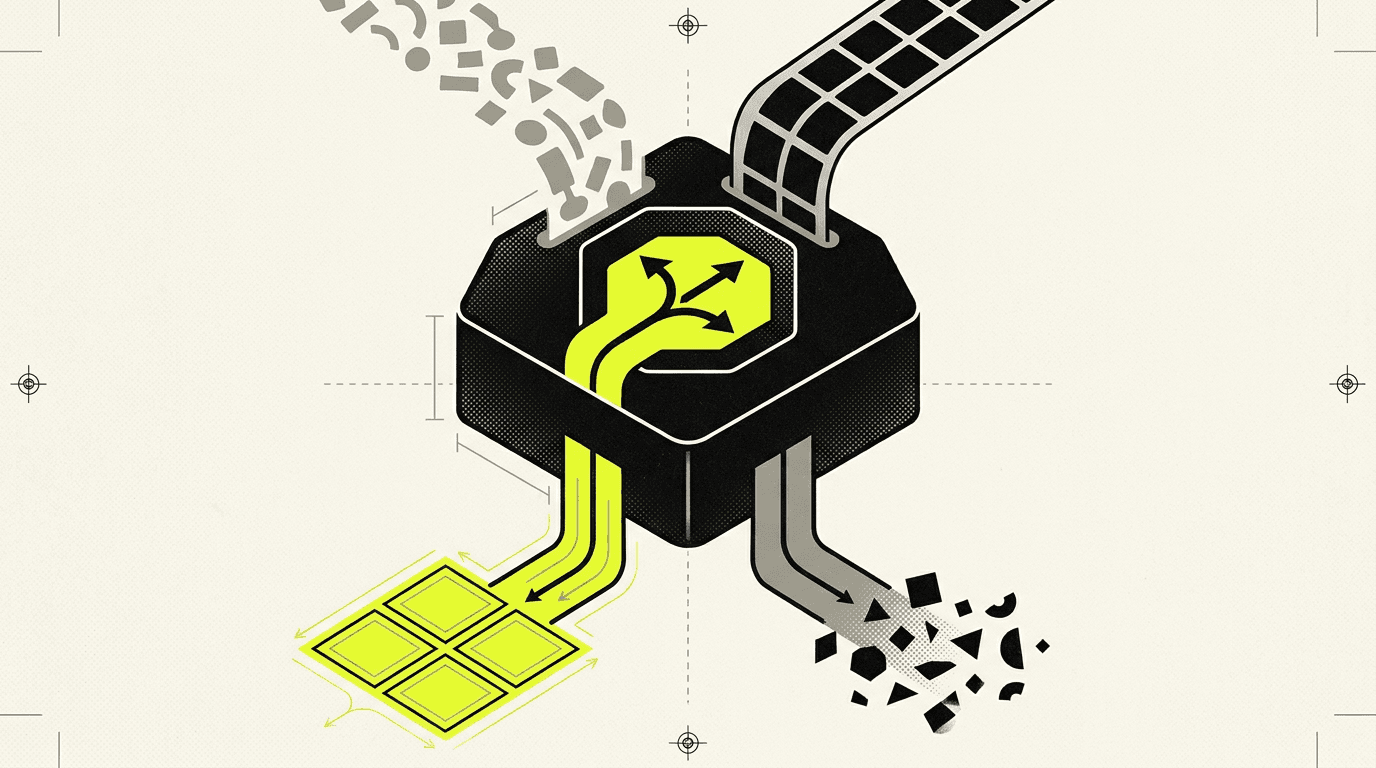
The $400/month Algolia bill looked reasonable until we saw what AI search could do for complex product discovery — then came the $4k token reality check.
Your Head of E-commerce sees the search analytics: 34% of visitors use search, but only 12% convert. The current Algolia setup works fine for exact matches, but customers searching for "comfortable work shoes for standing all day" get zero results while you stock 47 relevant SKUs. The $400/month Algolia bill feels reasonable until you realize you're losing $40k/month in search conversion revenue.
We evaluated AI search for three Medusa stores with 1000+ SKUs each. The performance gains are real — 23% improvement in search-to-cart conversion on long-tail queries — but the token economics hit harder than expected. Here's what $4k/month in OpenAI costs actually buys you, when it pays back, and the hybrid approach that cuts AI spend 60% while keeping the conversion lift.
Token Economics: The $4k Reality Check
At 50,000 searches per month with GPT-4 embeddings and semantic ranking, you're looking at $4,200/month in token costs. Claude Haiku drops that to $1,800/month with comparable accuracy for most product queries. The math changes fast: a beauty brand with complex product attributes ("cruelty-free moisturizer for sensitive skin with SPF") sees 31% better results with AI. A parts supplier searching by exact model numbers sees no meaningful improvement over traditional search.
GPT-4 embeddings: $4,200/month at 50k searches (includes embedding generation + semantic ranking)
Claude Haiku: $1,800/month at 50k searches (faster inference, 90% of GPT-4 accuracy)
Algolia baseline: $400/month at 50k searches (traditional keyword + faceted search)
Hybrid approach: $1,600/month (AI for 40% of queries, traditional for 60%)
When AI Search Wins (and When It Doesn't)
AI search dominates on intent-heavy queries where customers describe what they need, not what they know. "Dress for a beach wedding" returns better results than any keyword matching. But for transactional searches — exact SKUs, model numbers, price filtering — traditional search still wins on speed and accuracy.
Fashion and beauty brands see the strongest AI search ROI. Complex product attributes, seasonal trends, and synonym matching ("moisturizer" vs "face cream" vs "hydrating serum") play to AI's strengths. B2B parts catalogs with precise part numbers see minimal improvement and should stick with traditional search plus better filtering.
Implementation: 3 Weeks and a Vector Database
The Medusa implementation takes 3 weeks with a senior developer: one week for vector database setup (we use Pinecone or Postgres with pgvector), one week for embedding pipeline and search routing logic, one week for query classification and performance tuning. The hardest part isn't the AI — it's deciding which queries get AI treatment.
// Query router that saved us $2.6k/month in unnecessary AI calls
export async function routeSearchQuery(query: string) {
  // Exact SKU/model patterns go to traditional search
  if (/^[A-Z0-9-]{6,}$/.test(query) || query.includes('SKU')) {
    return searchTraditional(query);
  }

  // Intent-heavy queries (>3 words, descriptive) get AI
  if (query.split(' ').length > 3 && !isNumericQuery(query)) {
    return searchSemantic(query);
  }

  // Everything else: traditional first, AI fallback if <3 results
  const traditional = await searchTraditional(query);
  return traditional.length >= 3 ? traditional : searchSemantic(query);
}
The routing logic above cut our AI token spend from $4,200 to $1,600/month while maintaining the 23% conversion improvement on queries that matter. Most searches are still traditional — AI handles the 40% of queries where semantic understanding adds real value.
Revenue Impact: Where the 23% Comes From
The conversion lift isn't uniform. AI search improves long-tail discovery queries by 23% but barely moves exact product searches. The revenue impact compounds on higher-AOV categories where customers browse by need, not by knowing exactly what they want.
Long-tail queries ("summer dress for work under $150"): +23% search-to-cart conversion
Exact matches ("Levi's 501 jeans size 32"): +2% conversion (mostly from better variant matching)
Zero-result queries: -67% (AI finds relevant products where keyword search fails)
Average session value: +$18 per search session (better product discovery)
For a store doing $2M annually with 30% search traffic, that 23% lift on discovery queries translates to roughly $140k additional revenue. Against $19k annual AI costs (hybrid approach), the ROI is clear — but only if your product catalog benefits from semantic matching.
The Hybrid Approach: Best of Both Worlds
Pure AI search is overkill for most catalogs. The hybrid approach routes queries intelligently: traditional search for exact matches and simple keywords, AI for complex intent queries, traditional search with AI fallback for everything else. This cuts token costs 60% while preserving the conversion gains that matter.
The sweet spot isn't replacing traditional search — it's augmenting it. Let AI handle the queries where semantic understanding adds value, and let traditional search handle everything else at 10x lower cost.
Evaluating AI search for your Medusa store?Show us your search analytics and catalog— we'll map out the token economics and implementation approach for your specific use case.
For production deployments, we implement the hybrid routing approach with query classification, vector database optimization, and gradual AI rollout. The goal is measurable conversion improvement at sustainable token costs — not AI for the sake of AI.
// Nakon razgovora
Pitanja koja operateri postave sljedeća
How long does AI search implementation take on Medusa?
3 weeks with a senior developer: 1 week vector database setup, 1 week embedding pipeline, 1 week query routing and performance tuning. The routing logic is the most critical piece.
What's the real monthly cost for AI search at scale?
$1,600-4,200/month at 50k searches depending on model choice and routing strategy. Hybrid approach (AI for 40% of queries) typically runs $1,600/month vs $400 for traditional search.
When does AI search ROI make sense for e-commerce?
Fashion, beauty, home goods with complex product attributes see 20%+ conversion lifts. B2B parts catalogs with exact model numbers see minimal improvement. Need $2M+ annual revenue to justify the token costs.
Should we replace Algolia entirely with AI search?
No. Hybrid approach works better: traditional search for exact matches, AI for intent-heavy queries. Pure AI adds unnecessary latency and cost for simple product lookups.
Which AI model performs best for product search?
Claude Haiku offers 90% of GPT-4 accuracy at 60% lower cost for most product catalogs. GPT-4 only worth the premium for highly complex product attributes or technical specifications.
How do you measure AI search performance vs traditional?
Track search-to-cart conversion by query type, zero-result rate, and average session value. Focus on long-tail queries where AI adds the most value — exact matches should still use traditional search.
Izdvojen citat
AI search wins on 'flowy summer dress under $100' but loses badly on 'Nike Air Max 270 size 9' — the trick is routing each query type to its optimal engine.